Quick Overview

Owner
Dave Ramos
Prototype
New York Central, Erie, and Lehigh Valley operations on the west side of Manhattan
Era
1947
Physical Location
40 miles northeast – About 0:50 travel time
Layout Dimensions
20′ x 22′
Mainline Run
4 scale miles; Most of the layout is non-main track
Scale
HO
Scenery
60%; Urban
Pets
Dog and cat; No moose and squirrel
Handicap Accessible
No
Website
Description
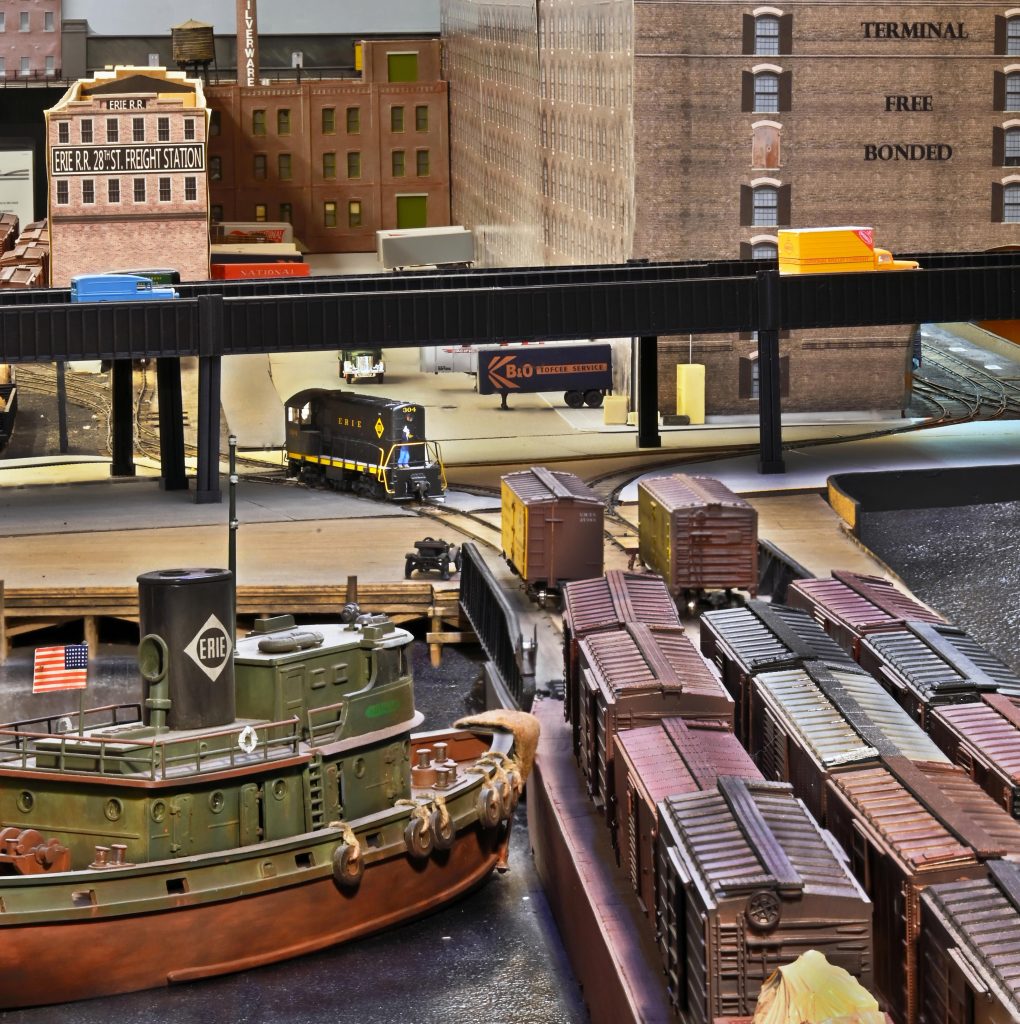
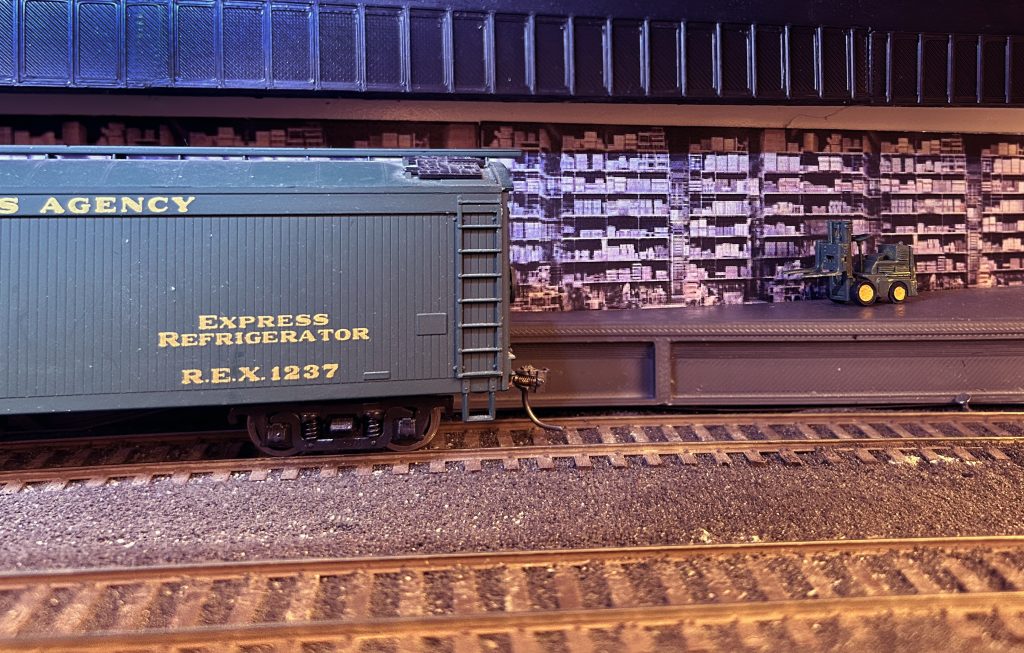
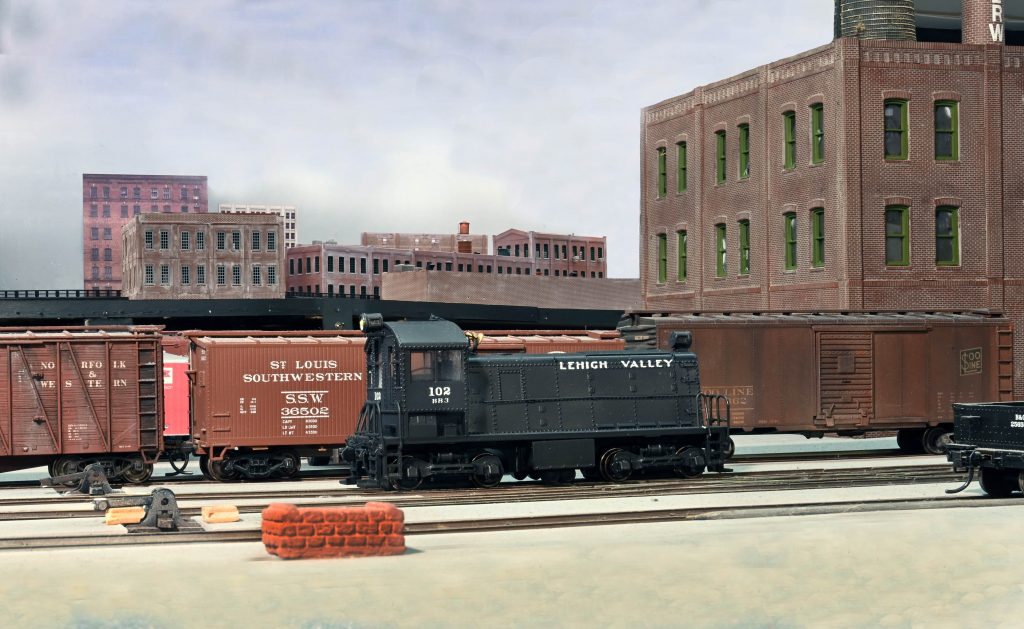
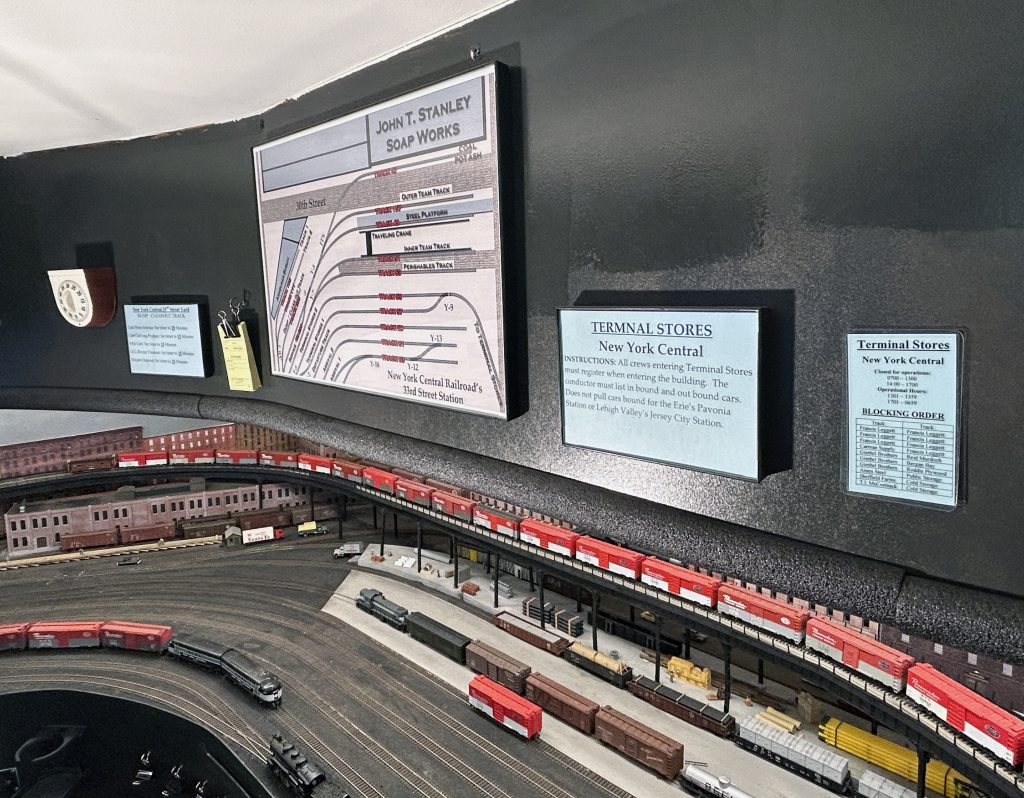
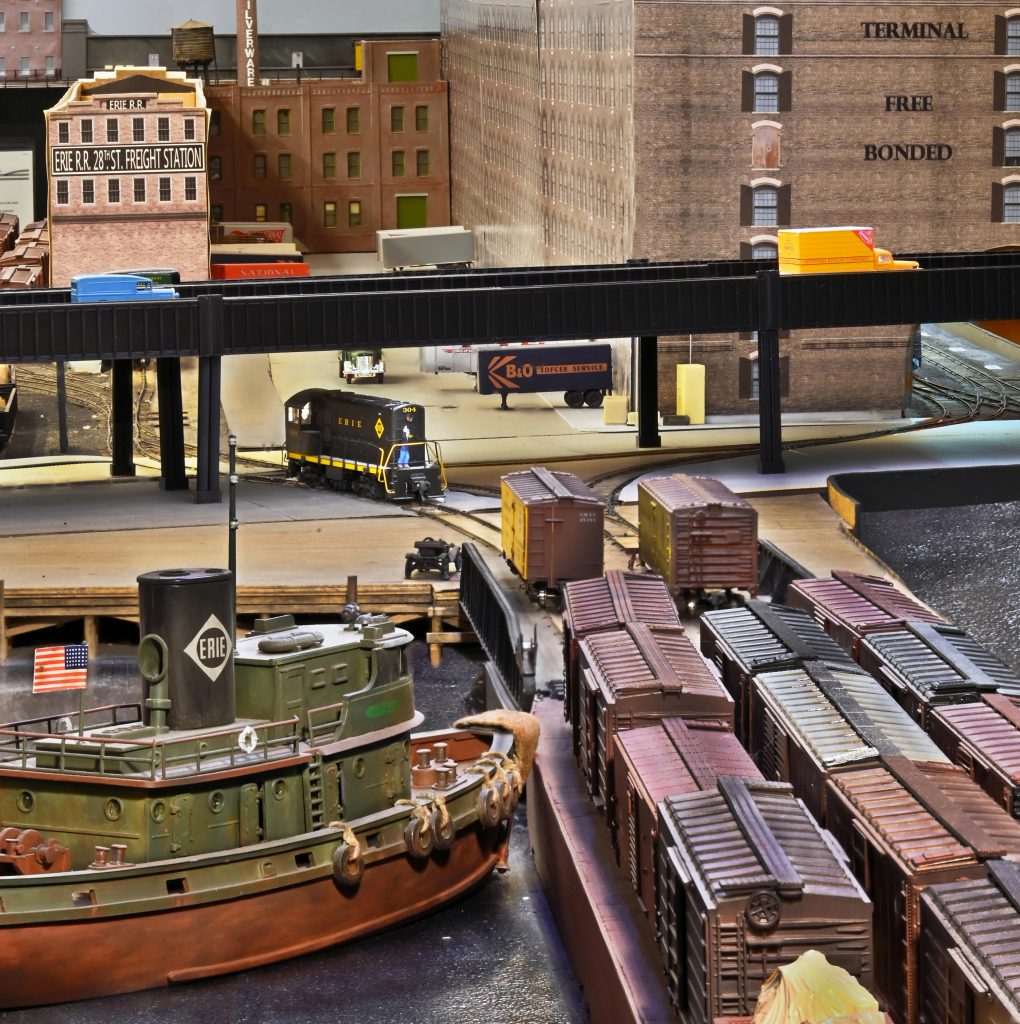
The New York Harbor Railroad recreates the dense freight railroad operations along Manhattan’s West Side in 1947, blending urban railroading with rail-marine activity. The design is based on a four city block long stretch where the New York Central 30th Street Branch (Street Line), Erie, and Lehigh Valley all jointly serve Terminal Stores, a massive late 19th century freight warehouse. Terminal Stores alone has two sidings and 22 car spots, making it a centerpiece of operations.
NYC 33rd St Yard, Erie 28th St Yard, LV 27th St Yard, and NYC 30th St Branch (the famous High Line) are all modeled. It is busy, it is dense, and it is amazingly roomy because most crews are working in one location and not moving around much.
Operations follow a published 1947 New York Central timetable, governed by a 2.5:1 fast clock.
Operations
What to know about the operations of this layout.
Control System
NCE DCC radio throttles, JMRI Wi-Fi throttles
Dispatching
Yard Limits
Communications
Verbal
Car Routing
Single-use car cards/waybills with pull times
What to Bring/Needed
Any Wi-Fi throttle will work or use available throttles
Pace
As busy as you wish to make it
Crew Size
2 to 12 since the railroads can all operate independently or all operate together
Operating Positions
NYC 33rd St. Yardmaster
NYC 33rd St. East Yard Switcher
NYC 33rd St. West Yard Switcher
NYC St. John’s Park Freight Terminal Manager
NYC 30th St. Branch Road Crew (2)
Erie 28th St. Agent
Erie 28th St. Engineer
Erie 28th St. Conductor
Lehigh Valley 27th St. Agent
Lehigh Valley 27th St. Engineer
Lehigh Valley 27th St. Conductor
Gallery